.png)
Epidural Block

About This Procedure
Procedure Time: Less than 1 Hour
Driver Required: Yes
Total Visit- 1-3 Hours
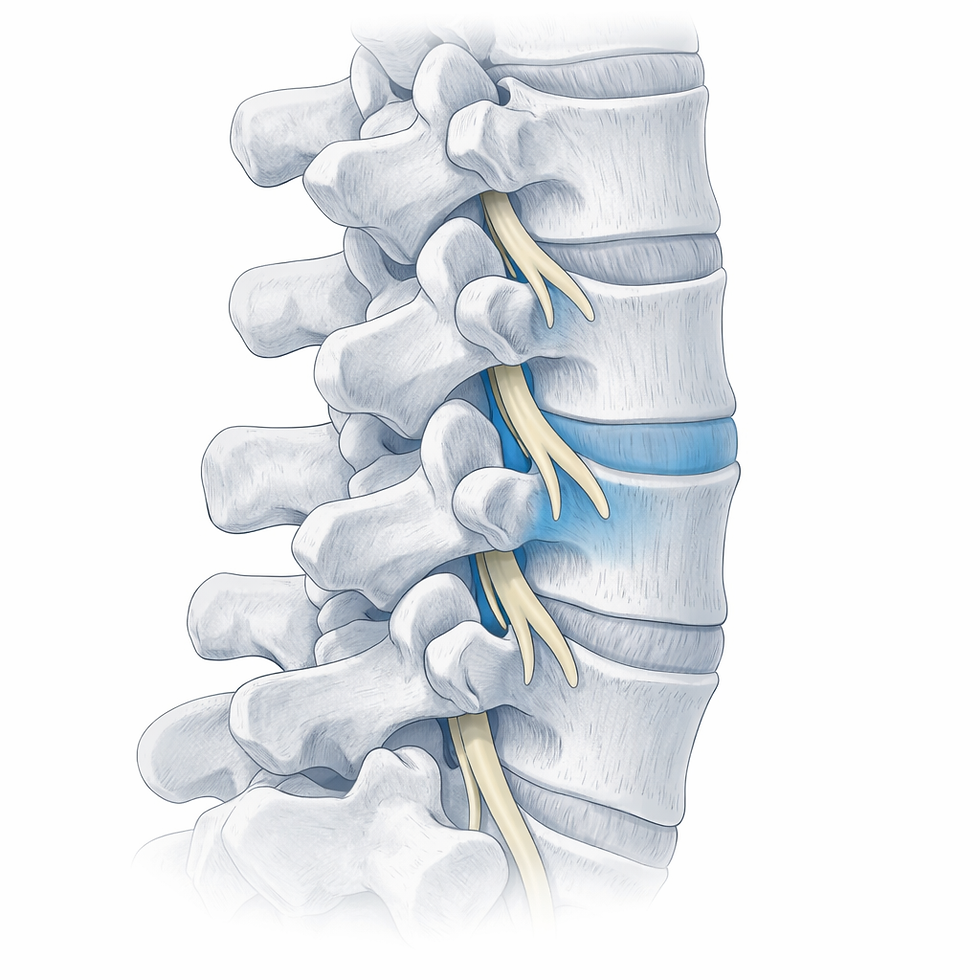
Your spine has nerve roots that branch out between the vertebrae like exits off a highway. When one of those nerve roots gets compressed or inflamed — from a herniated disc, a bone spur, or narrowing of the spinal canal — it can cause pain, burning, or numbness that shoots into your neck, back, arm, or leg.
An epidural block delivers a combination of numbing medicine and anti-inflammatory steroid directly into the epidural space — the area just outside the covering of your spinal cord, right where those irritated nerve roots live. Think of it like getting medication directly onto a swollen, bruised area instead of just taking a pill and hoping it finds the right spot.
The procedure is done under fluoroscopy — live X-ray guidance — so Dr. Savu can see exactly where the needle is going in real time and place the medication precisely where it needs to be. It can be performed in the neck, upper back, or lower back depending on where your pain is coming from. Some patients use it to confirm a diagnosis. Others get meaningful, lasting relief. Most get both.
Benefits
Delivers medication directly to the source of nerve irritation — not just into the bloodstream
Reduces swelling and inflammation around the affected nerves.
Minimally invasive — no incision, no general anesthesia
Helps confirm which nerve root or spinal level is causing your symptoms
Can be performed in the neck, upper back, or lower back.
Numbing medicine provides quick temporary relief while the steroid takes effect
What to Expect
1
Prep & Positioning
You'll be brought into the procedure room and positioned face down on the table. The team will get you comfortable and explain what's about to happen before anything begins.
2
Cleanse & Numbing
The skin over the injection site is cleaned with a sterile solution. A local anesthetic is injected to numb the skin and deeper tissue. You'll feel a brief sting — most patients say that's the worst part, and it only lasts a few seconds.
3
Guided Injection
Using live X-ray guidance, Dr. Savu advances the needle into the epidural space. Contrast dye confirms the needle is in the right position before medication is delivered. You may feel mild pressure during this step.
4
Recovery & Discharge
You'll be moved to a recovery area and observed before you leave. A nurse will go over your discharge instructions. You'll need your driver — you cannot drive yourself home. Most patients are back to normal activity within 24–48 hours.
This procedure may be right for you if you have:
Back or neck pain with shooting pain, numbness, or tingling into an arm or leg
Spinal stenosis — narrowing of the spinal canal that's compressing nerves
Pain that needs more specific diagnosis before deciding on next steps
A herniated disc pressing on a nerve
Inflammation around a nerve root that hasn't improved with conservative treatment
Frequently Asked Questions
The injection itself takes less than an hour. Plan on one to three hours at the office total when you factor in check-in, prep, the procedure, and recovery observation.
Most patients feel some immediate relief from the numbing medication, which lasts one to three hours. The pain may return before the steroid starts working — that typically takes about three days. Don't be alarmed if you feel your pain come back in between. That's expected.
It varies. Some patients get relief for weeks, others for months. It depends on the underlying cause of your pain and how your body responds. If it works well, it can be repeated as part of your ongoing treatment plan.
Eat a light meal before your appointment. Arrange a driver. Let the office know if you take blood thinners, aspirin, or anti-inflammatory medications like ibuprofen or naproxen. Continue routine medications for heart, diabetes, and blood pressure unless told otherwise.
Take it easy the rest of the day. Avoid strenuous activity, soaking in a bathtub, and swimming for 24 hours. Some soreness at the injection site is normal. Contact the office if you develop fever, increasing redness or drainage at the site, worsening pain, or new numbness or weakness.
Possibly. Some conditions respond to a single injection. Others benefit from a series of two or three spaced several weeks apart. Dr. Savu will discuss what makes sense based on how you respond.